

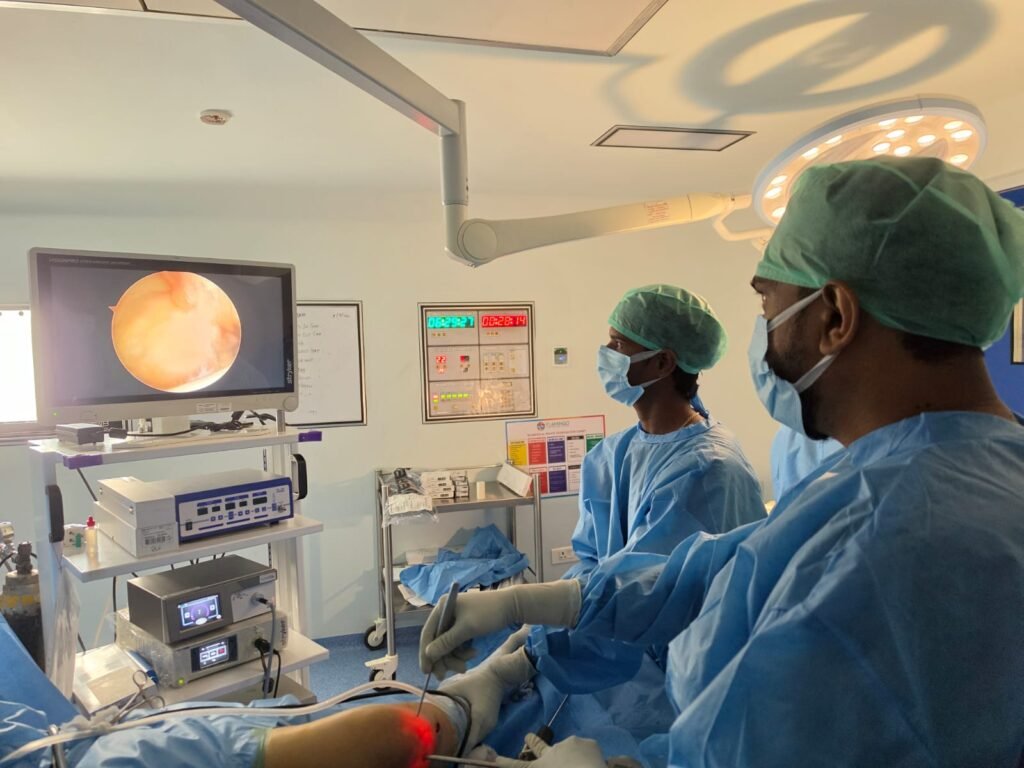
Case Overview
A 32-year-old woman presented with persistent right knee pain, difficulty bending the knee, and inability to perform routine daily activities following an ACL injury. MRI confirmed a complete anterior cruciate ligament (ACL) tear. After clinical evaluation and pre-operative assessment, she underwent arthroscopic ACL reconstruction with internal bracing under spinal anaesthesia.
What is an ACL Tear?
The Anterior Cruciate Ligament (ACL) is one of the major stabilizing ligaments of the knee. It prevents the tibia from moving excessively forward and provides rotational stability during activities such as walking, running, jumping, and pivoting.
Common causes include:
- Sports injuries
- Twisting injuries
- Road traffic accidents
- Sudden change in direction while running
Symptoms include:
- Sudden popping sensation
- Knee swelling
- Instability (“giving way”)
- Difficulty climbing stairs
- Inability to return to sports
Arthroscopic Findings
During arthroscopy:
- Posterolateral (PL) bundle – Completely torn\
- Anteromedial (AM) bundle – Partially intact
- PCL – Intact
- Medial Meniscus – Intact
- Lateral Meniscus – Intact
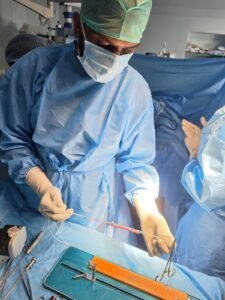
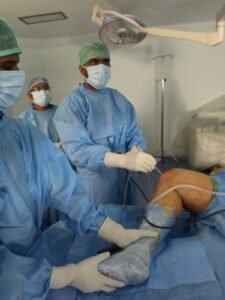
Surgical Technique
The ACL was reconstructed using the patient’s own hamstring tendons:
- Semitendinosus tendon
- Gracilis tendon
The graft was fixed using modern Arthrex TightRope RT fixation system.
An additional FiberTape Internal Brace was added to reinforce the reconstruction and protect the graft during early healing.
What is Internal Bracing?
Internal bracing is an advanced technique where a strong collagen-coated FiberTape acts as a protective “seat belt” for the reconstructed ligament.
Benefits include:
✔️ Better graft protection during healing
✔️ Improved initial stability
✔️ May reduce graft stretching
✔️ Allows confident rehabilitation
✔️ Helpful in active individuals and athletes
Advantages of Arthroscopic ACL Reconstruction
- Keyhole surgery
- Small incisions
- Less pain
- Faster recovery
- Minimal blood loss
- Better cosmetic outcome
- Early physiotherapy
- Excellent functional outcome
- Rehabilitation
Recovery is just as important as surgery.
The patient was advised:
- Toe-touch weight bearing initially
- Long knee brace
- Quadriceps strengthening exercises
- Physiotherapy
- Regular follow-up
Rehabilitation progresses gradually over several months to restore full motion, strength, and stability.
Take Home Message
Early diagnosis and timely ACL reconstruction help restore knee stability, prevent recurrent giving way, reduce the risk of meniscal damage, and enable patients to safely return to work, sports, and daily activities.
Call us at 7305989799 to book your appointments or Visit this link https://drjohnarthurorthohospital.com/contact/