

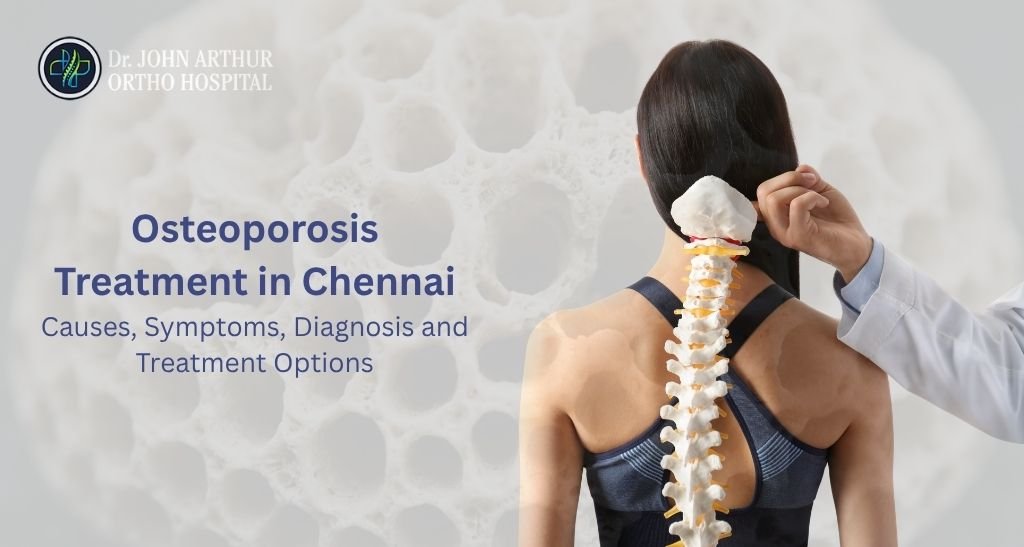
Osteoporosis is a bone condition that gradually weakens bones, making them fragile and more likely to fracture. It often develops without noticeable symptoms, which means many people discover they have osteoporosis only after experiencing a fracture following a minor fall or injury.
If you are searching for osteoporosis treatment in Chennai, understanding the condition, recognising risk factors and seeking timely medical evaluation can help protect your bone health and maintain mobility as you age.
At Dr. John Arthur Ortho Hospital, Avadi, Chennai, patients can receive orthopaedic evaluation and personalised guidance for osteoporosis management under the care of Dr. Peter Ponniah Jesudass, Consultant Orthopaedic and Trauma Surgeon. Treatment focuses on assessing bone health, reducing fracture risk and supporting long-term mobility.
What Is Osteoporosis?
Osteoporosis is a condition in which bones lose density and strength, increasing the risk of fractures. Healthy bones continuously break down and rebuild themselves. When bone loss occurs faster than new bone formation, the bones may become weak and porous.
Osteoporosis commonly affects the spine, hip and wrist. It can affect both men and women, although the risk increases with age and is particularly significant in women after menopause.
Early diagnosis is important because appropriate treatment and lifestyle changes can help reduce the risk of future fractures.
Common Symptoms of Osteoporosis
Osteoporosis is often called a silent bone disease because it may not cause pain or other noticeable symptoms in its early stages.
However, some signs may indicate reduced bone strength:
- Fractures following a minor fall or relatively small injury
- Persistent or sudden back pain, particularly after lifting or bending
- Gradual loss of height
- A stooped or hunched posture
- Repeated fractures involving the wrist, hip or spine
- Difficulty maintaining mobility after a fracture
Back pain can have many causes and does not automatically indicate osteoporosis. If you experience sudden severe back pain, especially after a minor injury, seek medical assessment.
What Causes Osteoporosis?
Several factors can contribute to osteoporosis and reduced bone density.
1. Ageing
Bone density naturally changes with age. Older adults may experience faster bone loss, increasing their susceptibility to fractures.
2. Menopause
The decline in oestrogen levels after menopause can accelerate bone loss, increasing the risk of osteoporosis in women.
3. Calcium and Vitamin D Deficiency
Calcium supports bone structure, while vitamin D helps the body absorb calcium. Inadequate intake or deficiency may contribute to poor bone health.
4. Lack of Physical Activity
Regular weight-bearing and muscle-strengthening activities help maintain bone strength. Prolonged inactivity can contribute to bone loss and muscle weakness.
5. Family History
A family history of osteoporosis or hip fractures may increase a person’s risk.
6. Certain Medical Conditions and Medications
Some hormonal disorders, digestive conditions and long-term use of certain medicines, including glucocorticoid steroids, can increase the risk of osteoporosis.
A medical assessment can help identify individual risk factors and determine whether further testing is required.
How Is Osteoporosis Diagnosed?
Early diagnosis helps doctors assess fracture risk and decide whether preventive measures or medication are necessary.
Bone Mineral Density Test
A DEXA or DXA scan is commonly used to measure bone mineral density, particularly at the hip and spine. It is a quick, low-dose X-ray examination that helps identify low bone density and osteoporosis.
Medical History and Physical Examination
The doctor may review your age, previous fractures, family history, medical conditions, medication use, posture and mobility.
Blood Tests
Depending on the patient’s condition, blood tests may be recommended to evaluate calcium levels, vitamin D status, kidney function or other potential causes of bone loss.
Not everyone requires the same investigations. The appropriate tests depend on individual risk factors and clinical findings.
Osteoporosis Treatment in Chennai: Available Treatment Options
Osteoporosis treatment aims to strengthen bones where possible, slow further bone loss and reduce the risk of fractures. The right approach depends on bone density, age, fracture history, overall health and individual risk factors.
1. Medication for Osteoporosis
Doctors may prescribe medicines that reduce bone breakdown or help improve bone strength. Depending on the patient’s risk profile, treatment may include bisphosphonates, denosumab or other osteoporosis medicines.
Some patients with a very high fracture risk may be considered for bone-forming treatments.
These medicines have different benefits, risks and precautions. They should be selected and monitored by a qualified doctor rather than taken without medical advice.
2. Calcium and Vitamin D Support
Adequate calcium and vitamin D intake is an important part of osteoporosis management.
Depending on individual dietary intake and test results, a doctor may recommend dietary changes or supplements. Excessive supplementation is not always beneficial and may be inappropriate for some people, including those with certain kidney conditions.
3. Physiotherapy and Exercise
Suitable physical activity can help maintain muscle strength, balance and functional mobility.
A physiotherapist or doctor may recommend:
- Walking or other suitable weight-bearing activities
- Muscle-strengthening exercises
- Balance training to help reduce falls
- Posture and movement guidance
- Individually adapted exercises for people with vertebral fractures or significant bone weakness
Exercise should be tailored to the patient’s condition. High-impact activities, forceful spinal bending and heavy lifting may be unsuitable for some people with severe osteoporosis.
4. Fall Prevention
Preventing falls is essential for people with weakened bones.
Helpful measures include keeping floors free from clutter, improving lighting, installing bathroom grab bars where needed, wearing supportive footwear and reviewing medicines that may cause dizziness.
Regular vision checks and balance assessments may also help reduce fall risk.
5. Treatment of Osteoporosis-Related Fractures
When osteoporosis leads to a fracture, treatment depends on the affected bone, the severity of the injury and the patient’s general health.
Treatment may involve a cast or brace, pain management, rehabilitation or surgery when indicated. A fracture can also be an important warning sign that the patient needs assessment and treatment to reduce the risk of another fracture.
Foods That Support Bone Health
A balanced diet can help maintain bone health and complement medical treatment.
Consider including the following foods as part of a varied diet:
- Calcium-rich foods: Milk, curd, paneer and suitable calcium-fortified foods
- Green vegetables: Selected leafy greens and other vegetables
- Protein sources: Eggs, fish, pulses, beans and dairy products
- Vitamin D sources: Suitable fortified foods and oily fish
- Nuts and seeds: As part of a balanced diet
Sunlight exposure can help the body produce vitamin D, but the amount produced varies with skin type, location, season and other factors. People at risk of deficiency may need testing and personalised advice.
Diet alone may not be sufficient to treat established osteoporosis. Patients with a high fracture risk may also need medication.
Can Osteoporosis Be Prevented?
Although not all cases can be prevented, certain habits can help support bone health and reduce fracture risk.
- Include adequate calcium and protein in your diet.
- Maintain appropriate vitamin D levels.
- Stay physically active with suitable weight-bearing and strengthening exercises.
- Avoid smoking and limit alcohol consumption.
- Maintain a healthy body weight.
- Take steps to prevent falls at home and outdoors.
- Discuss bone-density screening with your doctor if you have risk factors.
- Follow prescribed treatment and attend recommended follow-up appointments.
People with a history of fragility fractures, long-term steroid use or other significant risk factors should seek medical advice rather than waiting for symptoms to appear.
When Should You Consult an Orthopaedic Doctor?
Consider consulting an orthopaedic specialist if you have experienced a fracture after a minor fall, have persistent unexplained back pain, notice a gradual loss of height or have been diagnosed with low bone density.
Medical evaluation is also advisable if you are postmenopausal, older, taking long-term steroid medication or have a medical condition associated with bone loss.
Sudden severe back or hip pain after a fall, inability to stand or walk after an injury, or suspected fracture requires urgent medical assessment.
Osteoporosis Treatment at Dr. John Arthur Ortho Hospital, Avadi, Chennai
If you are looking for osteoporosis treatment in Chennai, Dr. John Arthur Ortho Hospital in Avadi provides orthopaedic evaluation and bone-health management. The hospital’s approach includes assessing fracture risk, guiding treatment decisions, supporting fracture prevention and planning follow-up care according to the patient’s needs.
Under the care of Dr. Peter Ponniah Jesudass, Consultant Orthopaedic and Trauma Surgeon, patients can discuss concerns related to osteoporosis, fragility fractures, back pain and reduced mobility.
The hospital also provides orthopaedic services for fractures, joint conditions, sports injuries and other bone and joint problems.
Patients from Avadi, Ambattur, Thirumullaivoyal, Pattabiram, Poonamallee and nearby areas can contact the hospital to enquire about an appointment.
Hospital Contact Details
Dr. John Arthur Ortho Hospital
Address: Ground Floor, No. 182, JB Estate, Poonamallee–Avadi High Road, Avadi, Chennai, Tamil Nadu 600054.
Phone: 7305989799
Website: https://drjohnarthurorthohospital.com/
Frequently Asked Questions About Osteoporosis Treatment
1. Which doctor treats osteoporosis in Chennai?
An orthopaedic specialist can assess bone health, investigate osteoporosis-related fractures and advise on appropriate management. Depending on the patient’s needs, care may also involve an endocrinologist or another medical specialist.
2. Can osteoporosis be treated without surgery?
Yes. Most osteoporosis management focuses on medication when indicated, adequate nutrition, suitable exercise and fall prevention. Surgery may be needed for certain fractures, but it is not the routine treatment for osteoporosis itself.
3. Is osteoporosis painful?
Osteoporosis usually does not cause pain until a fracture occurs. A spinal compression fracture may cause sudden or persistent back pain, although back pain can also result from many other conditions.
4. Which test confirms osteoporosis?
A DEXA or DXA bone mineral density scan is commonly used to diagnose osteoporosis and assess bone density. The doctor may also recommend other tests depending on the patient’s medical history.
5. Can osteoporosis be reversed?
Treatment can improve bone density in some patients, maintain bone strength and reduce fracture risk. The degree of improvement varies, and ongoing management is often necessary.
6. When should I get a bone-density test?
Testing is generally recommended for certain older adults and people with risk factors such as previous fragility fractures, early menopause, long-term steroid use or medical conditions associated with bone loss. Your doctor can advise when screening is appropriate.
Osteoporosis can weaken bones without causing obvious symptoms, but early diagnosis and appropriate treatment can make an important difference to long-term bone health. Medication when needed, good nutrition, suitable exercise and fall prevention can help reduce fracture risk and preserve independence.
For osteoporosis treatment in Chennai, consult Dr. Peter Ponniah Jesudass at Dr. John Arthur Ortho Hospital, Avadi, for an assessment and treatment plan tailored to your bone health and medical needs.
Medical note: This article is for general educational purposes and is not a substitute for a professional diagnosis or individual medical advice.