

Tailbone pain, medically known as coccydynia, can make everyday activities such as sitting, standing up, driving and bending surprisingly uncomfortable. While tailbone pain may sometimes improve with simple measures, persistent or severe pain should be evaluated to identify the underlying cause.
For people looking for tailbone pain treatment in Chennai, understanding the possible causes and available treatment options can help you take the right next step.
What Is Tailbone Pain?
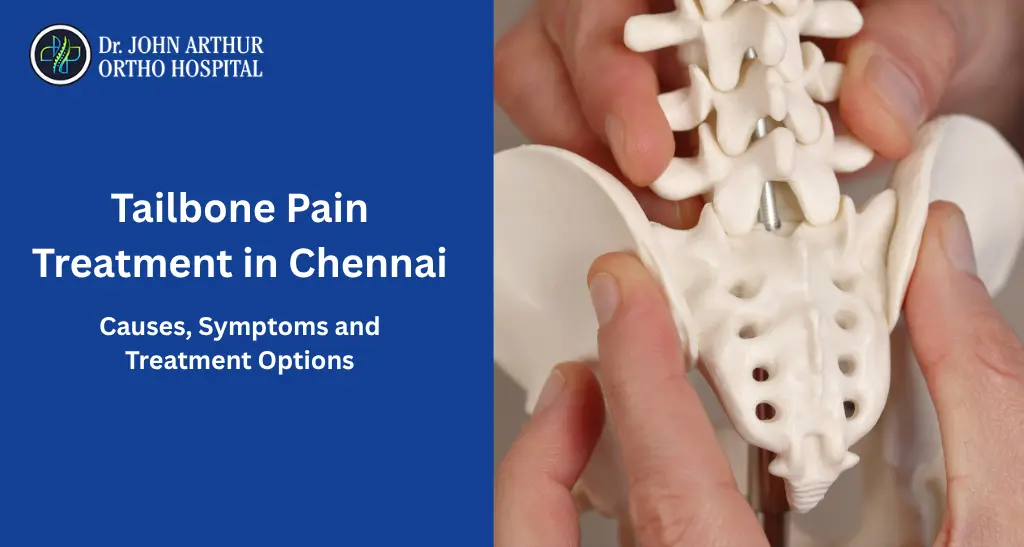
The tailbone, or coccyx, is the small bony structure at the bottom of the spine. It supports the body when sitting and connects with several muscles and ligaments around the pelvis.
Pain in this region is called coccydynia. It can range from a mild ache to sharp or intense pain, particularly when sitting or changing position.
Common Causes of Tailbone Pain
Tailbone pain can develop for several reasons, including:
1. Falls or Direct Injury
A fall directly onto the buttocks can bruise or injure the coccyx. In some cases, trauma can cause a fracture or dislocation.
2. Prolonged Sitting
Sitting for long periods, particularly on hard surfaces, can place repeated pressure on the tailbone and contribute to pain.
3. Poor Sitting Posture
Slouching or leaning backwards while sitting can increase pressure around the coccyx.
4. Childbirth
During childbirth, pressure on the pelvic region can sometimes affect the tailbone and surrounding structures.
5. Degenerative Changes
Age-related changes in the joints and structures around the lower spine and coccyx can sometimes contribute to persistent discomfort.
6. Repetitive Strain
Activities involving prolonged sitting or repeated pressure on the tailbone may contribute to inflammation and pain.
Symptoms of Coccydynia
Tailbone pain may feel different from person to person. Common symptoms include:
- Pain while sitting
- Pain when getting up from a chair
- Tenderness around the tailbone
- Pain when leaning backwards
- Discomfort during prolonged sitting
- Pain during bowel movements in some cases
- Pain that becomes worse after prolonged activity
Persistent symptoms following a fall or accident should not be ignored.
How Is Tailbone Pain Diagnosed?
A doctor will generally begin with a detailed medical history and physical examination. They may ask about:
- Previous falls or injuries
- Duration and severity of pain
- Activities that make the pain worse
- Sitting habits and posture
- Previous spinal or pelvic problems
Depending on the symptoms and examination findings, imaging investigations such as X-rays, CT scans or MRI may be recommended to evaluate the coccyx, lower spine and surrounding structures.
The appropriate investigation depends on the individual patient’s symptoms and clinical findings.
Tailbone Pain Treatment Options
Treatment depends on the cause and severity of the condition. Many patients can initially be managed with non-surgical approaches.
Activity and Posture Modification
Avoiding prolonged sitting and improving sitting posture can reduce pressure on the tailbone.
Cushions for Sitting
A specially designed coccyx cushion can help reduce direct pressure on the painful area while sitting.
Physiotherapy
Physiotherapy may include exercises and techniques designed to improve mobility, strengthen supporting muscles and address contributing movement or posture problems.
Medication
Depending on the individual’s condition, a doctor may recommend appropriate medication to help manage pain and inflammation.
Injections
For persistent coccydynia that does not respond adequately to conservative treatment, targeted injections may be considered in selected patients.
Surgery
Surgery for tailbone pain is uncommon and is generally considered only in carefully selected patients with persistent symptoms that have not improved with appropriate non-surgical treatment.
When Should You See an Orthopaedic Specialist?
Consider seeking medical evaluation if:
- Tailbone pain persists for several weeks
- Pain is interfering with sitting or daily activities
- Symptoms began after a significant fall or accident
- Pain is progressively getting worse
- You experience numbness, weakness or other neurological symptoms
- Conservative measures have not provided adequate relief
Early assessment can help identify the cause and determine an appropriate treatment plan.
Tailbone Pain Treatment in Chennai at Dr. John Arthur Ortho Hospital
Dr. John Arthur Ortho Hospital, Avadi, Chennai, provides orthopaedic evaluation and treatment for conditions affecting the spine, joints, bones and musculoskeletal system.
Patients experiencing persistent tailbone pain can undergo clinical assessment to help determine whether the symptoms are related to the coccyx, lower spine, surrounding muscles or another underlying condition.
The hospital provides a range of orthopaedic services, including spine care, physiotherapy and rehabilitation, with treatment planned according to the patient’s condition and clinical requirements.
Located in Avadi, the hospital can also serve patients from surrounding areas of Chennai who are looking for orthopaedic consultation for persistent back, spine or tailbone-related pain.
Don’t Ignore Persistent Tailbone Pain
Tailbone pain may sometimes be temporary, but persistent or recurring pain deserves proper evaluation. Identifying the underlying cause is an important part of choosing the right treatment.
If you are experiencing ongoing tailbone pain and are looking for tailbone pain treatment in Chennai, consult an orthopaedic specialist for an appropriate evaluation.
Call us at 07305989799 to book your Appointments.