


Persistent back pain, numbness in the legs, difficulty walking, and weakness in the feet can significantly affect daily life. These symptoms often indicate a serious spinal condition that requires timely evaluation and specialized treatment.
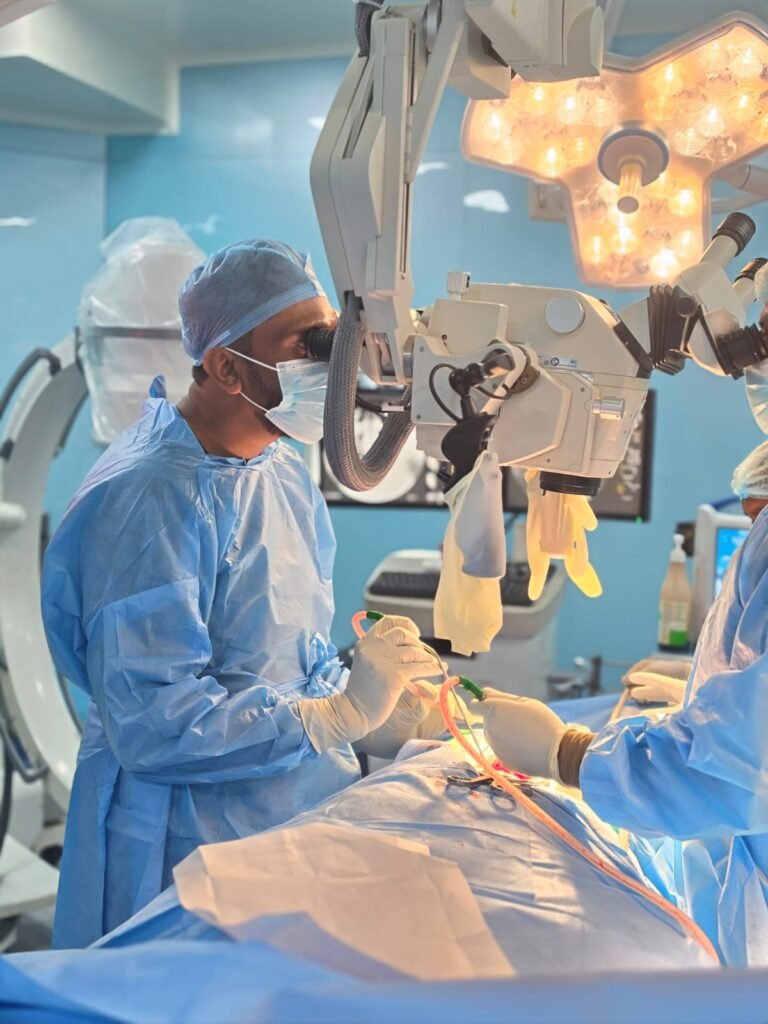
At Dr. John Arthur Ortho Hospital, Avadi, our spine specialist, Dr Peter Ponniah Jesudass successfully performed a Microscopic Lumbar Decompression with Posterior Pedicle Screw Stabilization for a patient suffering from severe multilevel lumbar canal stenosis. The surgery relieved pressure on the nerves while restoring spinal stability, helping pave the way for improved mobility and recovery.
Patient Presentation
A 32-year-old patient presented with multiple neurological symptoms that had progressively worsened over time.
Chief Complaints
The patient experienced:
- Low back pain radiating to both lower limbs (more severe on the left side)
- Numbness and tingling sensation in both legs
- Difficulty walking with imbalance
- Neck pain radiating to both upper limbs
- Numbness and tingling in both hands
- Weakness of the left foot
These symptoms were interfering with routine activities and significantly reducing the patient’s quality of life.
Diagnosis
After detailed clinical examination and advanced imaging, the patient was diagnosed with:
Severe Multilevel Lumbar Canal Stenosis (L2–L5) associated with:
- Bilateral Lumbar Radiculopathy (Left > Right)
- Neurogenic Claudication
- Left Foot Drop (EHL & EDL Muscle Power 0/5)
Lumbar canal stenosis occurs when the spinal canal narrows, compressing the spinal nerves. Without treatment, this condition may lead to worsening weakness, balance problems, and permanent nerve damage.
Understanding Lumbar Canal Stenosis
Lumbar canal stenosis is one of the most common causes of chronic lower back pain and leg pain in adults.
Common symptoms include:
- Persistent lower back pain
- Pain radiating down the legs
- Numbness or tingling
- Difficulty walking long distances
- Weakness in the legs or feet
- Balance issues
- Foot drop in advanced cases
Early diagnosis and timely surgical intervention can significantly improve outcomes.
Procedure Performed
The patient underwent:
Microscopic Lumbar Decompression with Posterior Pedicle Screw Stabilization
This advanced spine surgery combines microscopic precision with spinal stabilization.
During the procedure:
- General anaesthesia was administered.
- Microscopic decompression was performed to remove pressure from the compressed spinal nerves.
- Adequate decompression of all affected lumbar levels was achieved.
- Posterior pedicle screw fixation and spinal fusion were performed under fluoroscopic guidance.
- Stable spinal fixation was confirmed during surgery.
- Careful haemostasis was maintained throughout the procedure.
- The surgical wound was closed in layers.
The patient tolerated the surgery well and was shifted to the recovery room in stable condition.
Benefits of Microscopic Lumbar Decompression
Compared to conventional spine surgery, microscopic decompression offers several advantages:
- Smaller surgical incision
- Better visualization of nerves
- Greater surgical precision
- Reduced blood loss
- Less muscle damage
- Faster recovery
- Improved pain relief
- Better spinal stability when combined with pedicle screw fixation
Expected Recovery
Following surgery, patients may experience:
- Significant reduction in nerve pain
- Improved walking ability
- Better balance
- Relief from numbness and tingling
- Improved leg strength with rehabilitation
- Enhanced quality of life
Recovery varies depending on the severity of nerve compression and the duration of symptoms before surgery.
When Should You Consult a Spine Specialist?
Seek immediate medical attention if you experience:
- Severe or persistent lower back pain
- Pain radiating to one or both legs
- Numbness or tingling in the legs
- Difficulty walking
- Foot weakness or foot drop
- Loss of balance
- Neck pain associated with limb numbness
Early treatment can prevent permanent nerve damage and improve long-term outcomes.
Why Choose Dr. John Arthur Ortho Hospital, Avadi?
At Dr. John Arthur Ortho Hospital, we specialize in advanced spine care using modern surgical techniques and evidence-based treatment protocols.
Our expertise includes:
- Microscopic Spine Surgery
- Lumbar Decompression Surgery
- Minimally Invasive Spine Procedures
- Cervical & Lumbar Spine Disorders
- Pedicle Screw Stabilization
- Disc Prolapse Treatment
- Lumbar Canal Stenosis Surgery
- Sports Injuries & Trauma Care
- Joint Replacement Surgery
Our goal is to help patients regain mobility, reduce pain, and return to an active lifestyle safely.
Book Your Spine Consultation Today
If you or your loved one is suffering from chronic back pain, leg pain, numbness, or difficulty walking, don’t ignore the symptoms.
Early diagnosis and expert spine care can make a significant difference.
Dr. John Arthur Ortho Hospital
📞 Call / WhatsApp: 7305989799
Frequently Asked Questions (FAQs)
Is lumbar canal stenosis treatable?
Yes. Mild cases may improve with medications and physiotherapy, while severe cases often require surgery for lasting relief.
What is microscopic lumbar decompression?
It is an advanced spine surgery performed using magnification to safely remove pressure from compressed spinal nerves with greater precision.
Why are pedicle screws used?
Pedicle screws stabilize the spine after decompression, promote spinal fusion, and help maintain proper alignment.
How long does recovery take?
Most patients begin walking soon after surgery. Complete recovery depends on the patient’s condition, rehabilitation, and overall health.
Can foot drop improve after surgery?
If nerve damage has not become permanent, timely surgical decompression may improve strength and function with proper rehabilitation.